
A lot of 4x4 trail tips and tricks articles sound the same: check your tyre pressure, bring recovery gear, don't go alone. All true, all useful, and all things you'll find on a hundred other pages before you finish reading this sentence. What those checklists don't tell you is what actually surprises people once they're out there, the gear that never gets used, the moment something goes wrong, and the one piece of advice that experienced owners keep repeating to newcomers because it's the thing that actually matters.
This isn't another checklist. It's the advice we'd actually give a first-timer, backed up by what only experienced off-roaders could tell you. If you're planning or looking for your first trail, our comparison of the best 4x4 trails near Johannesburg is a good place to start once you've read this.
The Recovery Gear You May Not Need Right Now
Here's advice you won't get from a generic checklist: don't buy a winch for your first trail. This may sound strange, but we'd suggest you rather start with the basics, a kinetic rope and a pair of soft shackles, and only add a winch once you actually know you need one. A full recovery kit bought out of anxiety before your first trip is one of the most common ways beginners overspend, and a lot of that gear ends up sitting in the garage barely touched.
Does that mean don't buy it at all? Well no, This argument comes up repeatedly in the 4x4 community when debating what gear you need. We'd say get the gear you know you'll need, and get good quality gear, but don't go overboard. A good way to sum it up is like this: you don't need it until you need it, so buy once, cry once, and don't waste money on cheap gear that's likely to fail exactly when you need it most.
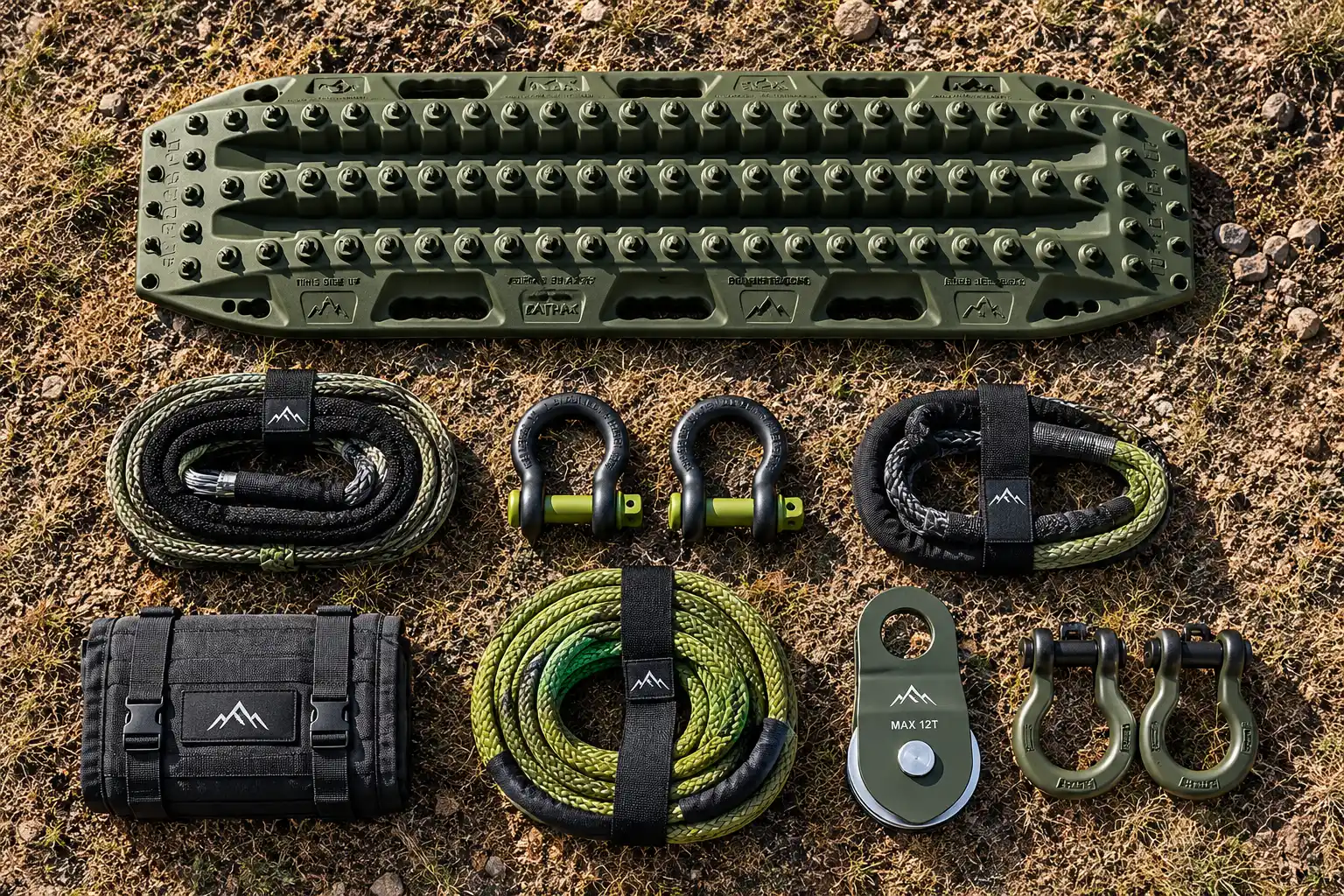
That last point matters just as much as the first. If you do buy a winch, don't buy the cheapest one you can find. We have heard countless stories about budget, unbranded winches that had failed on the trail, and the consistent advice in the 4x4 community is to spend properly on the few pieces of gear you do buy, rather than spreading a limited budget across a full kit of uncertain quality.
The Winch Cable Lesson Nobody Learns Until It Happens
Never stand in line with a winch cable or recovery strap under tension. It sounds obvious written down, but it's the single most common way off-roading recoveries go wrong, and it's worth understanding exactly why before you're standing next to one under load for the first time.
Winch cable failures happen and the details of why are worth paying attention to. In a Jeep community forum thread where owners shared their own experiences, one driver described a winch line snapping under load on a snow-covered ledge road, roughly 30 feet from the anchor point, with the recoiling cable travelling back toward the vehicle. The same driver noted that if it happened with a steel cable, and not the synethic cable they were using, the outcome could have been far more dangerous, since synthetic rope tends to drop to the ground when it fails rather than whipping back.
So if you do end up using a winch with a steel cable, keep well clear of the path a cable or strap would travel if it snapped, and treat any worn or questionable line as unusable rather than risking it. These aren't abstract warnings. They're the kind of lesson experienced drivers learn the hard way.
What South African 4x4 Owners Say Actually Catches Beginners Out
Your starting vehicle configuration matters more than most beginners expect, and it's worth locating your recovery points before you're on the trail, not once you're already stuck. Those two details are exactly the kind of thing that comes up when expert South African off-roaders talk to first-timers.
On a South African 4x4 community forum, there was a thread specifically aimed at people asking where to start with off-roading. People who engaged with the forum pointed out that certain factory wheel setups struggle more than others on tougher obstacles. So keep that in mind for your first 4x4 trail.
One thing you will learn along the way is how willing the local off-roading community is to help a newcomer. You'd be surprised, people are generally happy to lend their own expertise, time and even their recovery gear to someone who's just getting started.
The One Piece of Advice That Comes Up Again and Again
If there's one thing worth taking from all of this, it's don't go alone, and don't go with people who don't know what they're doing either. It's the simplest advice, and it's also the one we'd put above everything else here.
It matters because so much of the rest of the advice in this article, from recovery gear to cable safety to reading your vehicle's genuine limits, depends on having someone else there who's done this before. A first trail with an experienced group turns every one of these lessons into something you're shown, not something you learn the hard way on your own. It also changes how a genuine emergency plays out, since a group with one experienced driver in it has options a lone beginner simply doesn't, another vehicle to help with recovery, someone who already knows what a given obstacle actually requires, and someone who can tell the difference between a manageable situation and one worth turning back from.
Where to Actually Test This Advice for the First Time
None of this is a reason to avoid your first trail, it's a reason to pick the right one. A graded training park, like the one at Syringa Park's own 4x4 Paradise, is a genuinely lower-stakes place to put some of this into practice for the first time, since you're working through beginner-friendly routes rather than a technical trail where a mistake actually costs you.
If you're still working out how trail grading translates into what you'll actually experience, our 4x4 trail grading explained guide breaks that down in plain terms, and our guide on how to choose the right 4x4 trail walks through picking a trail that actually suits your experience level and group.
Frequently Asked Questions